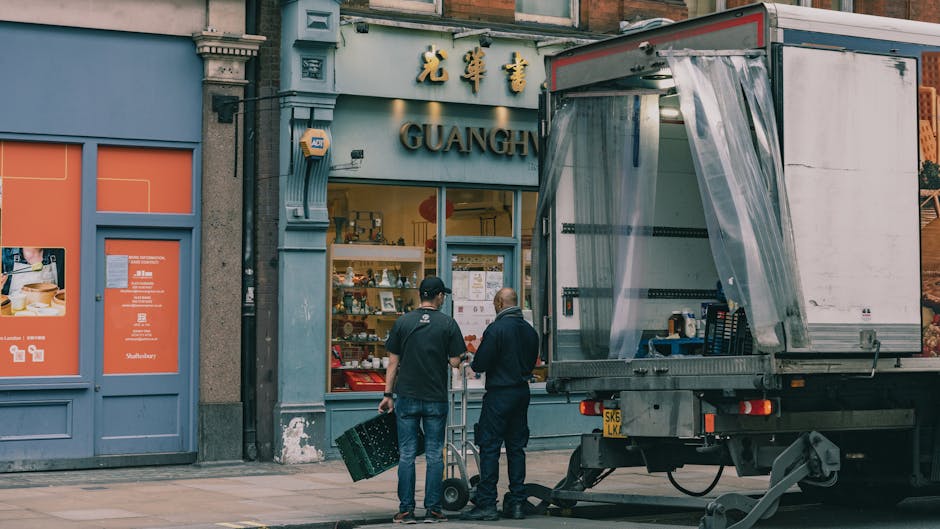
King Street Hammersmith removals for shops and businesses
Moving a shop, office, cafe, salon, studio, or other business unit on or near King Street in Hammersmith is rarely a simple lift-and-shift job. There are stock levels to protect, customers to think about, access to manage, and usually a fairly tight window to get everything done without chaos. That is exactly why King Street Hammersmith removals for shops and businesses deserves a proper plan, not a rushed one.
If you are weighing up a move, refurbishment, branch relocation, or even a temporary relocation while work is carried out, the practical questions start piling up quickly. What happens to stock? How do you move fixtures safely? Can the move happen outside trading hours? Who handles fragile display units, IT equipment, and confidential paperwork? Truth be told, most business moves are less about the van and more about coordination.
This guide walks through how commercial removals in this part of West London typically work, what to expect, where the risks usually appear, and how to make decisions that protect both your time and your bottom line. It is written for real-world use, not theory. A bit of common sense goes a long way here.
For readers planning a wider move, it can also help to look at the broader local service pages such as Man and Van Hammersmith, the dedicated removals in Hammersmith service, and practical options for man and van Hammersmith support when you need flexible transport. If your move involves home and business overlap, the page on house removals in Hammersmith may also be useful for understanding how mixed logistics are handled.
Table of Contents
- Why King Street Hammersmith removals for shops and businesses Matters
- How King Street Hammersmith removals for shops and businesses Works
- Key Benefits and Practical Advantages
- Who This Is For and When It Makes Sense
- Step-by-Step Guidance
- Expert Tips for Better Results
- Common Mistakes to Avoid
- Tools, Resources and Recommendations
- Law, Compliance, Standards, or Best Practice
- Options, Methods, or Comparison Table
- Case Study or Real-World Example
- Practical Checklist
- Conclusion
- Frequently Asked Questions
Why King Street Hammersmith removals for shops and businesses Matters
Commercial moves are different from domestic ones in almost every meaningful way. A home move is usually about furniture, boxes, and personal timing. A business move, especially in a busy area like King Street, also has to account for customers, trading hours, nearby loading restrictions, staff access, stock rotation, and the risk of downtime. One missed detail can ripple through the whole week.
King Street itself adds another layer of planning. It is a busy West London commercial corridor with retail, hospitality, offices, and mixed-use properties. That means access can be tighter than people first assume, especially if you are moving larger items, handling deliveries, or trying to coordinate around peak footfall. If you have ever watched a shop front become congested with half-unpacked crates and someone trying to find the tape gun, you will know how quickly a small delay becomes a headache.
For businesses, time really is money. Even a few hours of avoidable interruption can affect sales, customer experience, and staff productivity. And for some businesses, such as salons, clinics, or food outlets, there are extra operational dependencies: refrigeration, displays, clean surfaces, or specialist equipment that cannot simply sit in the corner and wait. A commercial removal must therefore be handled as an operational project, not just a transport job.
There is also reputation to think about. Customers, landlords, and neighbouring businesses notice how a move is managed. A calm, tidy, and professional process sends the right message. A chaotic one? Not so much. To be fair, nobody expects perfection on moving day. But they do expect competence, communication, and respect for the premises.
If your business occupies a unit nearby, or if you are coordinating a wider relocation within the borough, it may also be worth browsing the service range for office removals in Hammersmith and furniture removal in Hammersmith so you can see how different types of load are typically handled.
How King Street Hammersmith removals for shops and businesses Works
A well-run commercial move usually follows a straightforward sequence, though the detail changes depending on the size and type of business. The best operators start with a survey or detailed discussion of the premises, the items to be moved, access points, parking constraints, and timing. That initial planning stage matters more than many people realise. It is where problems are spotted before they become expensive.
1. Assessment and planning
The first step is to understand what is moving. Is it stock only? Shop fittings? Point-of-sale equipment? Filing cabinets? Desks and chairs? Fridges, shelving, mirrors, mannequins, or display units? A proper assessment should identify fragile items, awkward dimensions, specialist handling requirements, and anything that needs disassembly before it can be moved safely.
For a busy King Street site, the route in and out matters too. There may be stairs, narrow corridors, shared entrances, or limited parking. A good plan takes these into account before move day. No one wants the team standing outside with a wardrobe half-turned and a slightly desperate look on their faces.
2. Packing and preparation
Business removals often succeed or fail based on preparation. Stock should be sorted, labelled, boxed, and grouped logically. IT equipment should be backed up and disconnected in an orderly way. Sensitive paperwork should be packed securely, and if confidentiality is a concern, access should be limited to the right people only. This is where small systems save big frustration later.
Many businesses also benefit from a phased pack rather than one frantic all-night effort. That approach helps you keep trading for longer and reduces the risk of items being mislaid. It also makes unpacking much easier because the logic is still fresh in everyone's heads. If you have ever found a box marked "miscellaneous" three weeks later, you know why clear labelling matters.
3. Loading and transport
On moving day, the team will load items in a sequence that protects fragile goods and maximises space in the vehicle. For shops and businesses, this often means loading bulky fixtures first, then boxed stock, then essential items that should come off early at the new premises. Secure strapping and sensible stacking are non-negotiable. A sharp turn in West London traffic can be surprisingly unforgiving.
Depending on the property and vehicle size, the crew may need to make multiple trips. That is normal. What matters is that the schedule is realistic and the items are protected properly each time.
4. Delivery, placement, and basic setup
At the destination, a good commercial removal is not just about dropping items at the door. The team should place stock and furniture in the agreed rooms or zones so your staff can get on with setup quickly. For businesses reopening the same day, this can be the difference between an orderly restart and a stressed scramble.
If the move is part of a larger service journey, it can help to think in terms of related support such as same day man and van in Hammersmith for urgent transport needs or student moves in Hammersmith if you are dealing with smaller, lighter overflow items for staff accommodation or temporary storage. Not every business move needs the same level of service, and that flexibility is often useful.
Key Benefits and Practical Advantages
There are obvious benefits to using a structured commercial removal process, but a few of the less obvious ones are just as valuable. The main one, honestly, is peace of mind. When your team knows there is a plan, they stop trying to do everything at once.
- Reduced downtime: A planned move shortens the time your business is partially open or inaccessible.
- Less damage risk: Proper handling lowers the chance of broken stock, scratched fittings, or damaged floors.
- Better staff focus: Employees can stay on their actual jobs instead of becoming last-minute movers.
- Smoother reopening: Items are placed in sensible locations, making setup faster.
- Improved customer experience: The move feels organised, which reflects well on the business.
- Flexible scheduling: Many businesses can move after hours, overnight, or on quieter trading days.
There is also a financial angle that is easy to overlook. A move that takes longer than planned can cause extra payroll costs, delayed openings, and, in some cases, lost sales. Spending a bit more time on planning often saves money overall. That is not always the glamorous answer, but it is the true one.
Another practical benefit is that professional handling often reduces stress on the premises themselves. Shop flooring, doorframes, glass panels, and internal fittings can all suffer when people rush. And let's face it, rushing is what most moving days do to everyone.
Who This Is For and When It Makes Sense
Not every business needs the same moving solution. King Street Hammersmith removals for shops and businesses can suit a wide range of organisations, but the priorities vary.
Retail shops
Clothing stores, gift shops, tech retailers, and independent boutiques often need careful handling of stock, shelving, display fixtures, mirrors, and till systems. Timing is often tied to trading hours, so evening or early morning moves can be the best fit.
Cafes, restaurants, and hospitality venues
These moves can be more demanding because there may be chilled items, counters, appliances, tables, chairs, and compliance-sensitive surfaces to protect. If the business is closing, refurbishing, or relocating, clear sequencing is essential.
Offices and professional services
Small offices, agencies, consultancies, and service firms usually need help with desks, chairs, filing, IT equipment, and archive materials. Confidentiality and labelling are especially important here, because nobody enjoys hunting for a client file that was "definitely in box seven".
Salons, studios, and treatment spaces
These businesses often rely on specialist furniture, mirrors, electrical items, and a carefully arranged customer space. Even a short disruption can affect appointments, so a tight move plan is usually worth it.
Pop-ups, short-term leases, and expansion moves
If you are testing a new unit on King Street, expanding into a second site, or running a temporary pop-up, your move may need to be fast, low-disruption, and adaptable. The good news is that many removal services can be scaled to match that kind of need.
It makes sense to get commercial help when any of the following apply: fragile or heavy items, time-sensitive reopening, limited access, multiple departments, or anything that would be awkward for staff to move safely on their own. If you are unsure, a short planning conversation usually clarifies things pretty quickly.
Step-by-Step Guidance
If you want the move to run smoothly, the process needs structure. Here is a practical approach that works well for most shops and small businesses.
Step 1: Define what is moving
List every category of item: stock, fixtures, furniture, electronics, documents, cleaning equipment, signage, and anything fragile or high value. The more specific the list, the easier it is to plan labour, packing materials, and vehicle space.
Step 2: Set a realistic timetable
Build the schedule around trade patterns, staff availability, landlord access, and any building works. If you are moving near a busy period, allow extra time. A move that feels comfortable on paper can become tight once real traffic and loading conditions kick in.
Step 3: Decide what can be dismantled
Flat-pack shelving, modular counters, and some office furniture can often be dismantled to make transport safer. But do not strip things down randomly. Keep fixings in labelled bags and attach them to the relevant item if possible. That small habit saves a surprising amount of grief later.
Step 4: Prepare packing and labels
Use clear labels for destination rooms or zones. For example: "front display," "back office," "stock room," "treatment room," or "cash desk." This helps the unloading crew place items where they are actually needed rather than creating a mountain in the middle of the floor.
Step 5: Protect the premises
Cover vulnerable flooring, corners, and narrow access points where possible. If there are glass panels, delicate walls, or polished surfaces, it is worth adding protection. A little preparation here can prevent unnecessary repair costs.
Step 6: Keep the essentials separate
Some items should travel separately or be kept accessible: keys, alarm codes, payment terminals, charger cables, opening paperwork, first-aid items, and the first box of supplies needed at the new site. This is the box that everyone will ask for, immediately.
Step 7: Re-open in phases if needed
If the new location is not ready for full trading, focus on essential setup first: power, tills, workstations, stock access, and customer-facing areas. Then complete the rest once the business is functioning. Trying to do everything at once can feel heroic, but it often slows things down.
Expert Tips for Better Results
A few practical habits make a commercial move significantly easier. They are simple, but they work.
- Label by function, not just by room. A box marked "admin" is more useful than one marked "misc".
- Photograph setups before dismantling. This helps with reassembly, especially for displays, shelving, and desk layouts.
- Keep one person in charge. Too many instructions from too many people tends to slow everything down.
- Separate high-priority stock. The first items needed for trading should be clearly marked and loaded last.
- Check access in advance. Doors, lifts, stairs, parking, and any height restrictions should be confirmed before move day.
- Plan for disposal or recycling early. If anything is not moving, decide what happens to it before the van arrives.
One tip that people often skip: do a short "opening day" simulation at the new site. Not a full dress rehearsal, just enough to see whether the till, stock, bagging area, and customer flow make sense. It can reveal little issues before customers do. Sneaky, but useful.
And if the move involves a smaller set of urgent items, you may want to compare it with single item removal in Hammersmith or broader local moving support in Hammersmith so you are not overbooking a service you do not need.
Common Mistakes to Avoid
A lot of business moving problems are avoidable. Most of them come down to underestimating time, access, or the number of moving parts. A few are classic.
Leaving planning too late
This is the big one. A rushed move often means poor labelling, incomplete packing, and avoidable disruption. If you only start sorting items the day before, you are already fighting the clock.
Not measuring bulky items
It sounds basic, but oversized shelving, counters, and appliances can fail to fit through doors or around corners. Measure first. Guessing is not a strategy, despite what some people seem to believe on moving day.
Forgetting parking or loading access
King Street can be busy, and access restrictions can make a simple move harder than expected. If parking or stopping arrangements are not thought through, the entire schedule can slide.
Mixing essential and non-essential items
When everything is packed together, the first hours in the new premises become frustrating. Keep your essentials apart. It sounds obvious, yet it gets missed constantly.
Ignoring fragile or specialist equipment
Glass displays, electronics, branded signage, and specialist fittings should not be treated like standard office chairs. They need the right packing and handling approach.
Not assigning a move coordinator
Someone needs to be the decision point. Without that, small uncertainties become delays. Where do these boxes go? Which items stay? Who has the keys? Who signs off the final walk-through? Better to decide those things before the van is loaded.
Tools, Resources and Recommendations
You do not need a huge toolkit for a business move, but the right basics make the process far less messy.
| Tool / Resource | Why it helps | Best for |
|---|---|---|
| Strong boxes and tape | Protects stock and files during transport | Retail, offices, archives |
| Bubble wrap or paper wrap | Cushions fragile items and display pieces | Glass, decor, electronics accessories |
| Labels and markers | Speeds up unloading and setup | All business moves |
| Furniture blankets | Helps prevent scuffs and scratches | Desks, counters, shelving |
| Tool kit / hex keys | Useful for dismantling and reassembly | Modular fittings, office furniture |
| Inventory sheet | Tracks what is moving, staying, or being disposed of | Any organised relocation |
A well-prepared inventory is underrated. It is not glamorous, but it keeps everyone honest and reduces arguments about missing items. Which, frankly, is a relief.
If you need a broader understanding of what support is available for larger or more complex relocations, the related service pages for flat removals in Hammersmith and packing services in Hammersmith can help explain how packing and transport are usually combined when timing is tight.
Law, Compliance, Standards, or Best Practice
Commercial removals in the UK should be approached with basic safety, access, and duty-of-care principles in mind. You do not need to turn the job into a legal seminar, but you do need to be sensible.
For example, businesses should think carefully about health and safety around lifting, carrying, trip hazards, and the protection of staff and visitors. If employees are helping with the move, the work should be organised so that nobody is asked to lift items beyond what is safe or reasonable. Some items are simply too awkward or heavy for ad hoc handling. Common sense applies, and it applies loudly.
Data protection matters too if files, devices, or customer information are being moved. Confidential documents should be packed and transferred with care, and any items containing sensitive data should not be left exposed in shared areas. If IT equipment is involved, back-up and secure handling should be part of the plan.
Building access rules, landlord permissions, and any lease conditions should also be checked in advance. For example, some commercial premises require advance notice for works, loading, or after-hours access. That is not unusual. It is just one of those details that can become very inconvenient if missed.
Best practice also means protecting the property itself. Floors, lifts, walls, and shared areas should be treated with care, especially in mixed-use buildings where other tenants are operating nearby. Nobody wants the move to leave a trail of dents and apologies.
If your business move touches public areas or shared entrances, it is worth agreeing who is responsible for access, keys, security, and final checks. Simple, yes. But still worth spelling out.
Options, Methods, or Comparison Table
There is no single "best" way to move a business. The right method depends on scale, timing, and how much disruption you can tolerate. Here is a practical comparison.
| Method | Best For | Advantages | Trade-Offs |
|---|---|---|---|
| Full commercial removal | Larger shop or office moves | Structured, efficient, less pressure on staff | Needs planning and coordination |
| Phased move | Businesses that must keep trading | Lower downtime, easier staging | Can take longer overall |
| After-hours move | Retail and customer-facing sites | Reduces impact on trading | May require tighter scheduling |
| Smaller van-based move | Compact shops or minor relocations | Flexible and cost-conscious | Not ideal for bulky fixtures |
Phased moves are often the sweet spot for shops. You can move stock and secondary items first, keep trading for a bit longer, and then shift the final fixtures once everything else is ready. It is not always glamorous, but it is usually the least disruptive path.
By contrast, if a business is fully closing one site and opening another in a single jump, a more intensive moving plan may be needed. The key is matching the method to the commercial reality, not forcing the business into an off-the-shelf solution.
Case Study or Real-World Example
Imagine a small independent lifestyle shop on or near King Street that needs to move to a slightly larger unit nearby. The business has shelving, a till counter, a small stockroom, fragile display pieces, and a few bulky feature items that draw customers in from the pavement. The owner wants the move done with minimal trading disruption, ideally over one evening and the following morning.
In a case like that, the move would usually be planned in stages. First, stock is sorted and labelled by category. Fast-moving lines are identified and packed separately so they can be made available first at the new shop. Display units are photographed, dismantled carefully, and boxed with their fixings. The till system is backed up and disconnected in a controlled way. Floor protection is laid down at both ends to reduce scuffs.
On moving day, the heavier fixtures are loaded first, then boxed stock, then priority items last so they can be unloaded early at the new premises. The final setup focuses on the things that matter most for opening: till position, front-of-house displays, signs, carrier bags, and the top-selling stock. The less urgent items can wait until the business is trading again.
That kind of move is not about speed for its own sake. It is about sequencing. Get the sequence right and the whole thing feels manageable. Get it wrong and even a short move can feel strangely endless. You know the feeling - one minute you are "nearly done", the next you are searching for the price labels and a screwdriver.
The same approach scales up for offices, salons, and hospitality spaces. The details change, but the logic stays the same: sort, label, protect, move, place, and reopen.
Practical Checklist
Use this as a working checklist before the move begins. It is deliberately simple, because simple is what gets used.
- Confirm move date and access times.
- Check parking, loading, and building entry arrangements.
- List every item category to be moved.
- Mark fragile, heavy, or high-value items clearly.
- Back up data and secure confidential documents.
- Separate essential opening-day items.
- Photograph fittings before dismantling.
- Prepare packing materials, tape, labels, and tools.
- Protect floors, walls, and corners where needed.
- Agree who is the move coordinator on the day.
- Plan disposal or recycling for items not going to the new site.
- Check the new premises are ready before items arrive.
Expert summary: The best commercial moves are rarely the fastest-looking ones. They are the ones that feel boringly organised in advance and calmly efficient on the day. That is usually a very good sign.
Conclusion
King Street Hammersmith removals for shops and businesses is really about protecting continuity. You are not just moving objects. You are moving trading potential, customer experience, stock value, and staff time. That is why the most successful moves start well before the van arrives.
If you plan access, label clearly, separate essentials, and choose the right moving method for your premises, the whole process becomes much more manageable. Even a tricky local move can feel straightforward when the pieces are arranged properly. And in a busy part of West London, that kind of calm organisation is worth a great deal.
If you are preparing a business move and want a practical, local service that understands the realities of commercial relocation, it makes sense to compare options early and get the planning side sorted before the pressure builds.
Get a free quote today and see how much you can save.
When the right plan is in place, the move stops feeling like a disruption and starts feeling like the next proper step forward. That's the bit worth aiming for.
Frequently Asked Questions
What makes commercial removals different from regular house removals?
Commercial removals involve business-critical items such as stock, equipment, fixtures, and documents, plus tighter timing and access constraints. The goal is usually to minimise downtime, not just move items from A to B.
How far in advance should I arrange a shop or business move on King Street?
As early as you can, ideally once the move window is realistic. The more stock, fittings, or access challenges you have, the more useful early planning becomes. Last-minute moves can be done, but they usually feel tighter than anyone would like.
Can a business move happen outside normal trading hours?
Often, yes. Many shops and offices prefer evening, early morning, or weekend moves to reduce customer disruption. The exact timing depends on access permissions, staffing, and what the premises allow.
What should I do with stock before the move?
Sort stock into clear categories, identify priority items, and decide what is moving, what is being sold off, and what can be disposed of. Good stock control makes unloading and reopening much easier.
Do I need to dismantle shelving and furniture before the removals team arrives?
Not always. Some items can be dismantled by the moving team, but it helps to agree this beforehand. If dismantling is needed, keep all screws, brackets, and fittings clearly labelled.
How do I protect fragile items during a business move?
Use proper packing materials, wrap items individually, label boxes as fragile, and keep glass, screens, and delicate displays separate from heavier loads. The aim is to stop movement inside the box, not just fill empty space.
What if my business cannot fully close during the move?
A phased move is often the best answer. That means moving non-essential items first and keeping core operations running for as long as possible. It takes a bit more coordination, but it can reduce downtime a lot.
Are there parking or loading issues around King Street I should think about?
Very likely, yes. Busy West London streets can have restricted stopping, loading limitations, or awkward access depending on the exact premises. It is sensible to confirm this before the move date rather than hoping for the best.
How can I keep confidential files and data safe during the move?
Use secure boxes or sealed containers, limit who can access them, and make sure any devices are backed up in advance. If there are sensitive records, treat them separately from general stock and furniture.
What items are commonly forgotten in a business move?
Charger cables, keys, cash desk accessories, labels, opening paperwork, small tools, and the first set of cleaning supplies are often forgotten. The annoying part is that you usually need them immediately at the new site.
Is a smaller van-based move enough for a shop?
Sometimes, yes. If the shop is compact or the move is light, a smaller vehicle can be a practical and cost-conscious choice. For larger fixtures, bulky stock, or multiple trips, a fuller commercial removal is usually more suitable.
What is the best way to avoid downtime during a business relocation?
Plan the move around trading patterns, label everything clearly, keep priority items separate, and make sure the new site is ready before anything arrives. Downtime is usually reduced by preparation rather than speed alone.
Should I use a general moving service or a specialist commercial removal?
It depends on the scale and complexity of the move. A general local service may suit lighter, simpler relocations, while a more structured commercial move is usually better for businesses with stock, fixtures, or strict timing needs.